
When it comes to manufacturing parts, metal stamping is a crucial process that ensures precision, speed, and scalability. However, even the most advanced stamping operations can experience quality issues. These defects can significantly impact the functionality, aesthetics, and cost-effectiveness of stamped parts. At TopMetalStamping, we are committed to helping our customers understand the reasons behind these defects, how to avoid them, and the best practices for maintaining the highest standards of quality. In this article, we’ll dive into eight common metal stamping defects, the underlying causes, and practical solutions.
8 Common Metal Stamping Defects
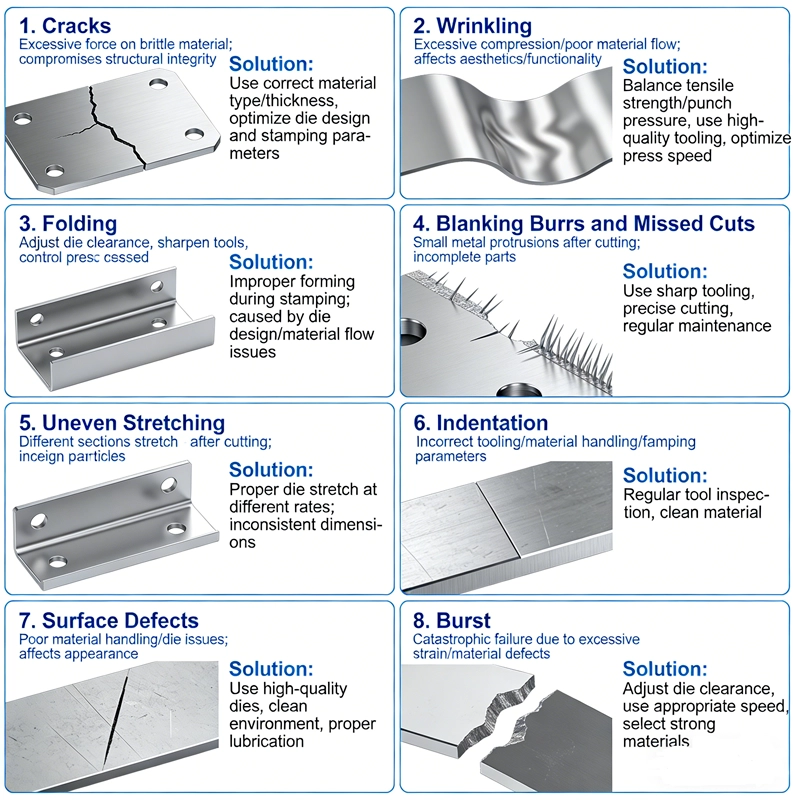
1. Cracks
Cracking is one of the most severe defects in metal stamping. It typically occurs when excessive force is applied to a material that is too brittle or not properly prepped. Cracks can compromise the structural integrity of the part, making it unsuitable for use.
Solution: To avoid cracking, ensure that the metal material used is of the right type and thickness for the part’s design. Proper die design and optimized stamping parameters can help alleviate the issue.
2. Wrinkling
Wrinkling occurs when the material buckles or folds due to excessive compression or poor material flow. This is often visible on the surface of the part, leading to poor aesthetics and functionality.
Solution: A careful balance between the material’s tensile strength and the punch pressure is necessary to prevent wrinkling. Using high-quality tooling and optimizing the press speed also help.
3. Folding
Folding happens when the metal sheet gets improperly formed during stamping, leading to a fold or crease in the material. This defect often results from issues with die design or insufficient material flow during the forming process.
Solution: Proper die clearance, tool sharpening, and press speed adjustments can prevent folding. It’s important to make sure the material has enough room to flow smoothly.
4. Blanking Burrs and Missed Cuts
Blanking burrs, which are small metal protrusions left after cutting, can affect the performance of the stamped parts. Missed cuts also lead to incomplete or defective parts.
Solution: Using sharp and high-quality tooling along with precise cutting techniques reduces burrs. Regular tool maintenance and proper alignment of the die also help ensure clean cuts.
5. Uneven Stretching
Uneven stretching happens when different sections of the material stretch at different rates. This leads to inconsistent part dimensions, and can make parts unusable in final assembly.
Solution: Proper die design and control of the stamping parameters, including the amount of strain on each section of the part, can help in evenly distributing the force to ensure consistent stretching.
6. Indentation
Indentations on the surface of a stamped part are usually caused by incorrect tooling, improper material handling, or foreign particles on the surface.
Solution: To avoid indentations, inspect the tooling regularly for wear and tear, and ensure that the material is free from contaminants before processing.
7. Surface Defects
Surface defects such as scratches, stains, or discoloration can occur due to poor material handling or issues with the stamping die. These defects can severely affect the appearance of the finished part, especially when aesthetics are important.
Solution: Using high-quality dies and keeping the stamping environment clean is essential to prevent surface defects. Proper lubrication and cleaning of the tools are also crucial.
8. Burst
A burst is a catastrophic failure that occurs when the material tears during the stamping process. This can be caused by excessive strain or material defects.
Solution: Properly adjusting die clearance, using appropriate stamping speeds, and selecting materials with adequate strength can help reduce the risk of burst.
Causes of Defects in the Metal Forming Proces
The quality of stamped parts can be compromised due to several underlying factors in the metal forming process. Understanding these causes can help prevent defects and improve the overall production efficiency.
1. Excessive Strain
Excessive strain on the material can lead to several defects like cracking and bursting. Proper control over the strain levels during the stamping process is essential.
2. Metal Material Issues
The type, thickness, and quality of the metal being used can significantly affect the final result. Low-quality metals or incorrect material selection can lead to defects like cracks or folding.
3. Punch Tools
Damaged or improperly maintained punch tools can cause defects like uneven cuts and surface marks. Regular inspection and maintenance are necessary for consistent performance.
4. Mold Design Issues
The design of the mold or die plays a significant role in the quality of the stamped part. Inaccurate die design can lead to defects such as wrinkling or improper forming.
5. Improper Stamping Parameters
Parameters like pressure, speed, and temperature must be carefully controlled. If not properly adjusted, they can lead to defects like uneven stretching or burrs.
6. Insufficient Lubrication
Lubrication is essential for minimizing friction between the die and the metal material. Insufficient lubrication can lead to wear and tear on tools, and result in defects like surface marks and burrs.

How to Avoid Defects in Metal Stamping
Preventing defects in metal stamping requires a combination of optimized design, proper tooling, and a controlled production environment. At TopMetalStamping, we recommend the following strategies to ensure the best quality:
-
Material Selection: Choose the right material for your part based on strength, ductility, and the final product requirements.
-
Die Maintenance: Regularly inspect and maintain stamping dies to ensure they are sharp and free from damage.
-
Proper Stamping Parameters: Adjust stamping speed, pressure, and temperature based on the material and complexity of the part.
-
Lubrication: Always ensure that the stamping process uses sufficient lubrication to reduce friction and prevent tool wear.
-
Regular Monitoring: Use sensors and real-time monitoring to track the production process and make adjustments when necessary.
By implementing these practices, companies can significantly reduce the occurrence of defects, leading to higher-quality parts and more efficient production processes.
Conclusion
Metal stamping defects are an unavoidable challenge in the manufacturing process, but with the right knowledge, tools, and procedures, these issues can be minimized or eliminated. At TopMetalStamping, we work closely with our clients to identify potential issues early and provide expert solutions that ensure the highest quality stamped parts. Whether you’re experiencing cracks, wrinkling, or surface defects, understanding the root causes and implementing best practices can help you avoid costly production delays and ensure your products meet the highest standards.