
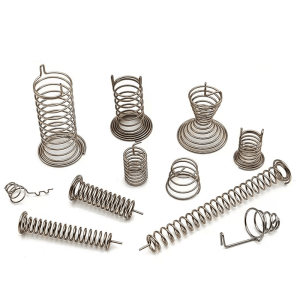
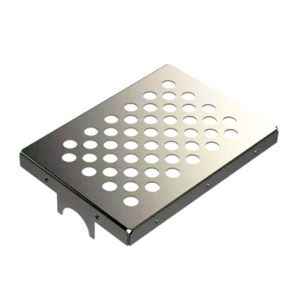
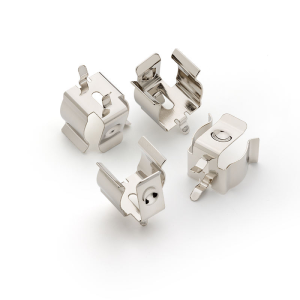
At Topmetalstamping we design and produce precision custom metal clips and sheet metal clips that solve fastening, grounding, alignment, and strain-relief problems across industries. Off-the-shelf clips sometimes fit but rarely optimize cost, assembly speed, or long-term reliability. Custom clips, engineered to your part and process, reduce assembly steps, improve yield, and lower total system cost. Below is a practical, B2B guide that explains shapes and sizing, material choices, manufacturing methods, industry applications, DFM tips, and why partnering with an experienced manufacturer matters.
Different Shapes for Clips and Fasteners
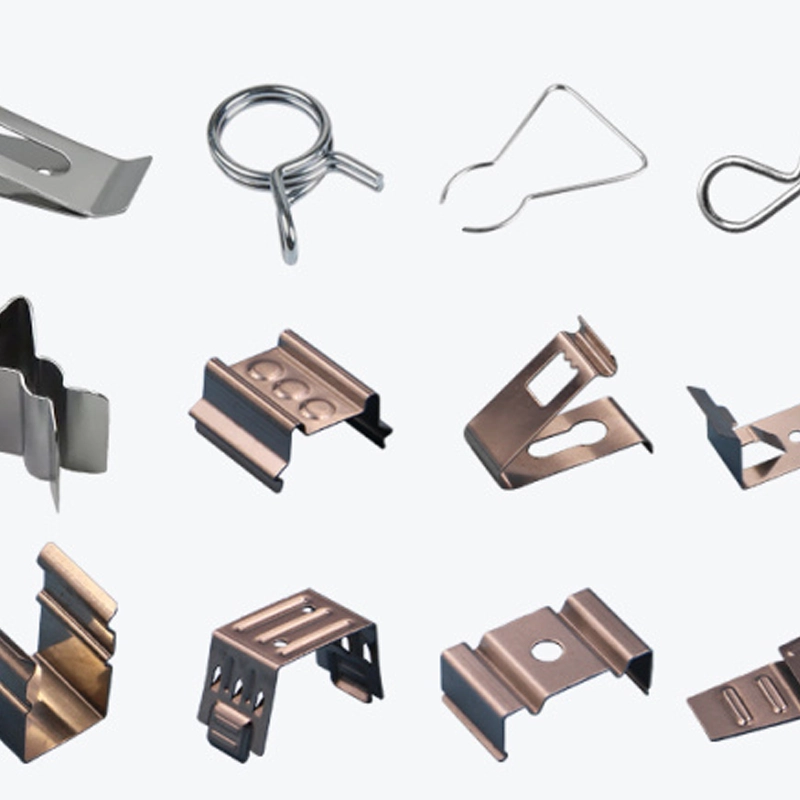
Clip geometry drives function. Common families include:
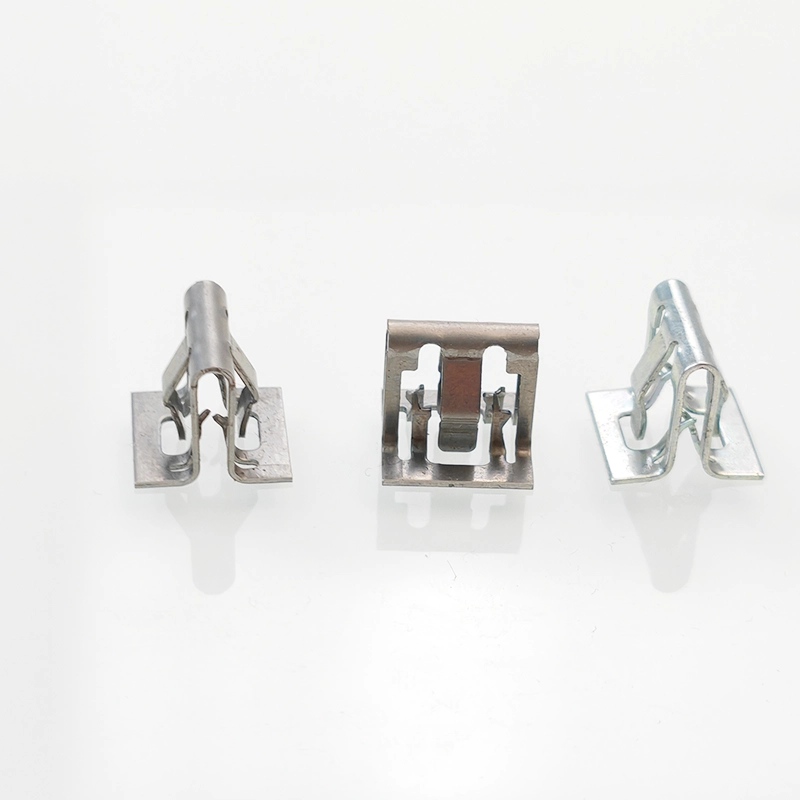
- Push-in / snap clips: compressible fingers that snap into a hole for blind assembly.
- Wire form clips: formed spring wire used for retaining or grounding.
- U-clips and J-clips: slip over a flange for captive fastening without tapped holes.
- Tinnerman / speed nuts: provide threaded engagement on thin panels.
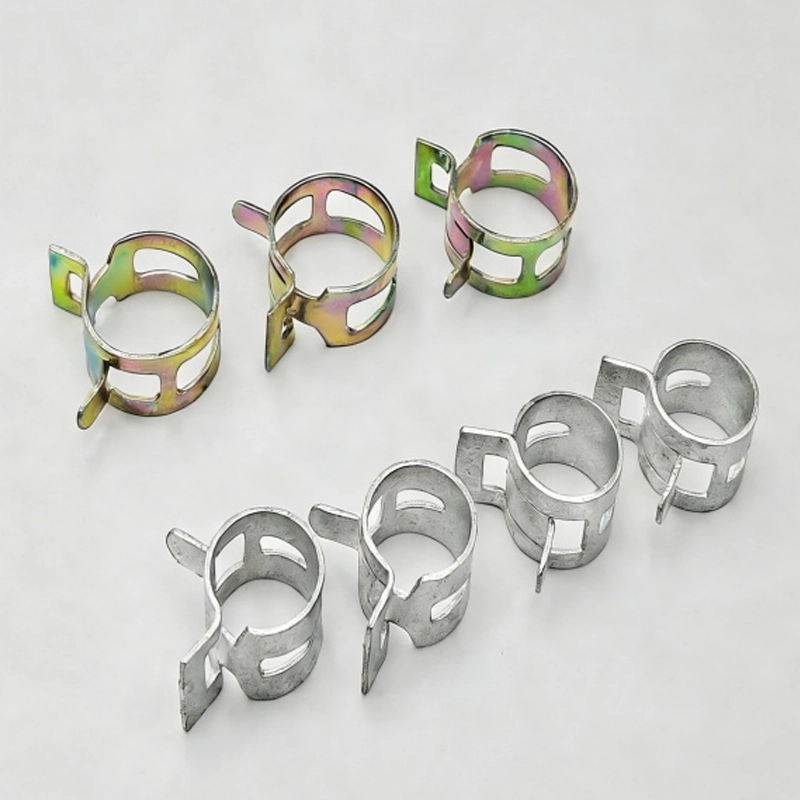
- Spring clips / leaf clips: provide preload for vibration resistance and EMI grounding.
- Retaining rings and circlips: radial or axial retention on shafts and grooves.
- Hinged clips and toggle clamps: mechanical latching for removable panels.
Each shape can be tuned for retention force, insertion angle, and reusability to match product ergonomics and service requirements.
Size Range for Clips and Fasteners
Custom clips span micro-sizes for electronics to large stamped clamps for automotive assemblies:
- Micro clips: diameters <2 mm for PCB cable routing.
- Standard panel clips: 2–12 mm engagement for consumer electronics and appliances.
- Heavy-duty clips: 12–50+ mm, thick materials or multi-finger formations for chassis and power applications.
Designers must specify insertion force, retention force, cycle life, and dimensional tolerances so tooling and process can be optimized.
Common Materials for Clips and Fasteners
Material selection balances spring performance, corrosion resistance, conductivity, and cost:
- Spring steels (e.g., 1074/1075, 65Mn) — high elasticity and fatigue life; often heat treated.
- Stainless steels (301, 304, 430) — corrosion resistance plus reasonable spring properties for outdoor or food environments.
- Phosphor bronze / beryllium copper — excellent conductivity and corrosion resistance for grounding clips and contacts.
- Copper alloys — used where electrical conductivity is primary.
- Aluminum — lightweight clips for non-spring, structural retention.
- Plated steels (zinc, nickel, tin) — cost-effective corrosion protection and solderability where needed.
Coatings (passivation, electroless nickel, zinc flake, or organic topcoats) are chosen per environment and assembly process.
Common Industries That Use Industrial Metal Clips and Fasteners
Custom clips appear across sectors:
- Automotive — harness routing, trim attachment, NVH retention, and battery pack clips.
- Consumer Electronics — board retainers, display mounts, and thermal interface retainers.
- Appliances & White Goods — panel fasteners and insulation clips.
- Aerospace & Defense — lightweight spring clips, EMI grounding, and engine cowling fasteners (with strict material and process control).
- Medical Devices — biocompatible clips for disposable assemblies or reusable instruments.
- Telecom & Datacom — cable management clips and grounding straps.
- Industrial Machinery & HVAC — hose clamps, vibration isolators, and protective guards.
Manufacturing Processes & Relevant Craft
Topmetalstamping provides integrated process capability to produce optimized clips:
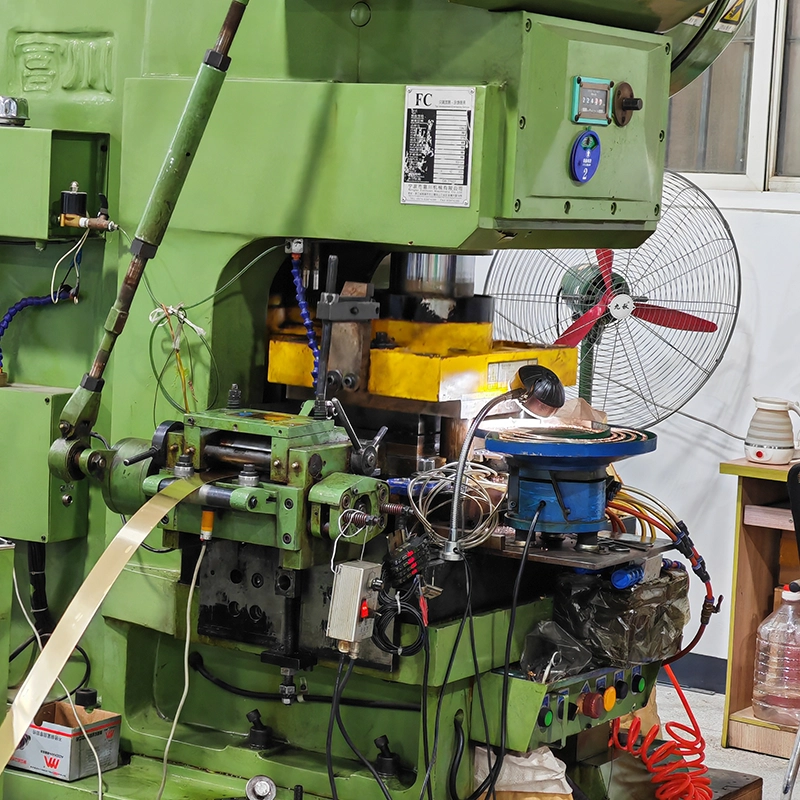
- Progressive & transfer stamping — high-speed forming for large volumes; multiple operations in a single die (blanking, piercing, bending, coining).
- Fine blanking — for burr-free, high-precision profiles used in sealing or mating surfaces.
- Laser cutting and EDM — rapid prototyping and low-volume complex shapes.
- CNC forming & wire forming — for spring wire and complex 3D shapes.
- Heat treatment & tempering — to achieve required spring properties and fatigue life.
- Secondary operations — plating (zinc, Ni, Sn), passivation, welding, riveting, and assembly.
- Surface finishing — deburring, tumbling, shot peening (improves fatigue), and coating for corrosion resistance.
- Quality & inspection — in-line vision, dimensional CMM checks, and pull-force / retention testing to spec.
We also provide DFM feedback early so stamped clip geometry and material grade align with expected life and manufacturability.
Design for Manufacturability (DFM) & Performance Tips
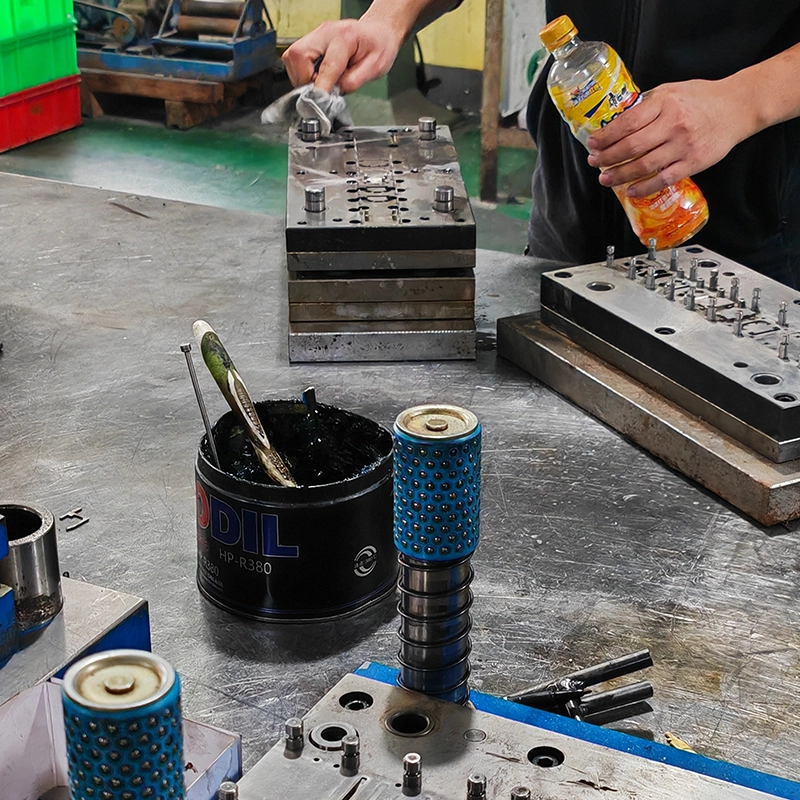
- Design for progressive tooling: keep part outlines simple and avoid undercuts that complicate dies.
- Specify functional tolerances, not overly tight dimensions: tolerances drive cost.
- Control edge radii and hole positions: small errors magnify in spring behavior.
- Consider finishing early: plating thickness alters fit — account for it in die offsets.
- Balance retention vs. insertion force: validate with prototype tooling and insertion tests.
- Use simulations: spring and finite element analysis (FEA) predict stresses and fatigue life.
- Plan for assembly: vertical insertion, blind insertion, and rework access influence clip choice.
Quality, Testing & Supplier Controls
Critical for B2B supply:
- Material certificates (CoA) and lot traceability.
- Process control: SPC for punch wear, hardness checks after heat treat.
- Functional testing: pull-out, push-in, cyclic retention tests, salt spray for corrosion resistance where applicable.
- First Article Inspection (FAI) and PPAP for automotive customers.
- Packaging & kitting: taped and re-el pack for automated assembly or bulk packs for manual lines.
Why Partner With Topmetalstamping
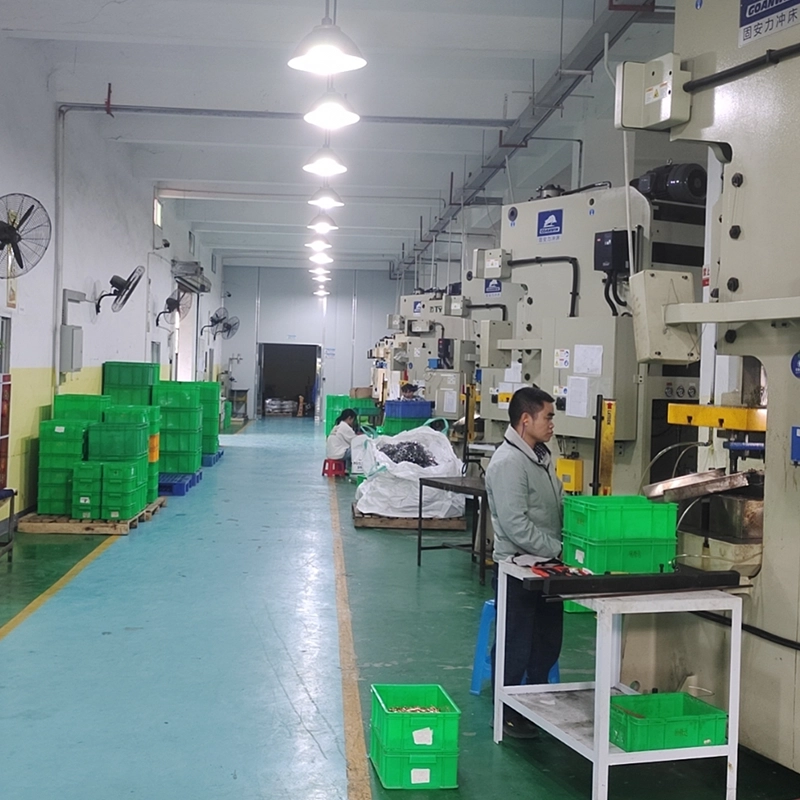
As a full-service manufacturer and factory, Topmetalstamping combines engineering, toolmaking, high-speed stamping, finishing, and assembly under one roof. Our OEM service and supplier network shorten lead times and reduce risk:
- Rapid prototyping with laser/EDM and quick-turn progressive die builds.
- Volume stamping with strict die maintenance and SPC controls.
- Integrated plating and coating lines for end-use readiness.
- Testing labs for retention, fatigue, and corrosion validation.
- Flexible MOQ options and supply-chain support for Kanban or JIT programs.
We partner with design teams to optimize clip geometry, specify the right alloy and temper, and validate via production trials — delivering clips that meet both functional and cost targets.
Conclusion & Next Steps
Custom metal clips are more than a commodity—they’re a small part that often determines assembly speed, product reliability, and field performance. Investing in custom engineering, the right alloy, and controlled manufacturing yields measurable benefits: faster assembly, fewer warranty returns, and improved product reputation.
If you need help specifying custom metal clips or sheet metal clips, Topmetalstamping can provide a full solution: engineering, prototyping, tooling, volume production, finishing, and testing — all backed by rigorous quality controls and OEM service capabilities.
Ready to optimize your clip design or request samples? Contact Topmetalstamping for a design review, rapid prototype quote, or full production proposal. Tell us your application, expected cycles, and target material — we’ll recommend the most cost-effective, high-performing clip solution.