
Are housing parts giving you headaches — poor fits, premature failures, or assemblies that won’t hold tolerance? At Topmetalstamping, we see those issues every day on the factory floor. If you’re a design engineer, purchasing manager, or product owner, this post will walk you through exactly how to get durable, dimensionally accurate housing parts every time. We’ll cover functions, essential characteristics, material and blank selection, heat treatment, machining methods, and the production controls a reliable factory must provide. If you want a one-stop service from prototype to full-scale manufacturing, keep reading — or contact Topmetalstamping for a custom service quote and engineering review.
What are housing parts and why they matter
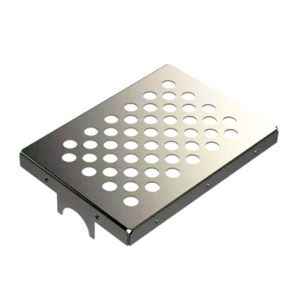
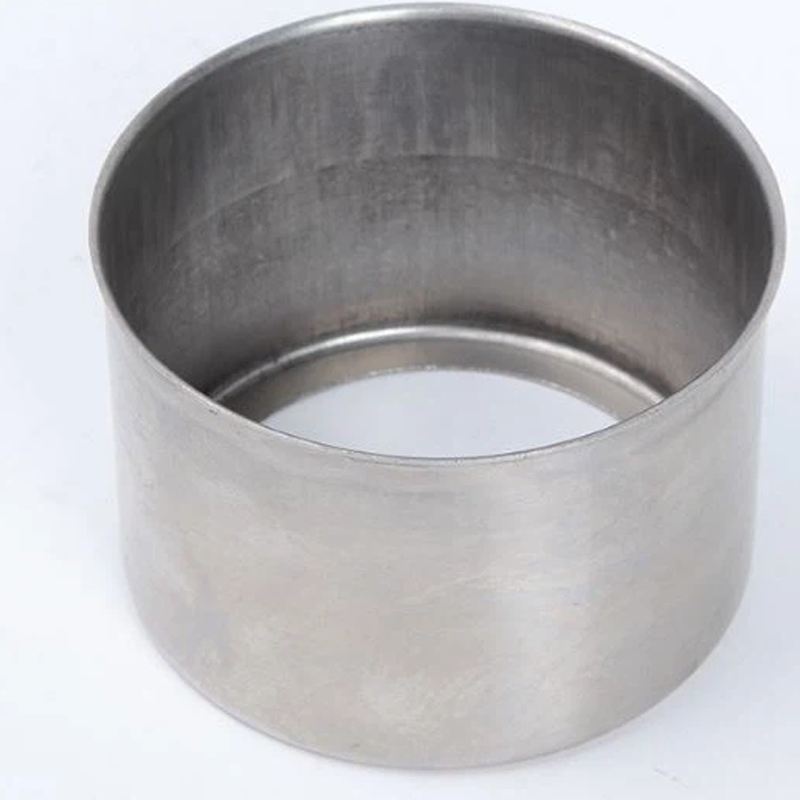
Housing parts — also called casings or box bodies — are the external shells and structural bases that support and protect internal mechanical or electronic components. They locate and secure bearings, shafts, gears, and seals; protect internals from contamination; assist thermal management; and often serve as the structural backbone for assemblies such as gearboxes, reducers, and machine spindles.
A housing’s manufacturing quality directly determines assembly accuracy, system performance, and service life. A poorly made housing can introduce misalignment, increase vibration and wear, and cause leakage — all of which raise warranty costs and degrade product reputation.
Core functions of housing parts
- Structural support and positioning: Maintain precise relative locations for shafts, bearings, gears and seals.
- Environmental protection: Block dust, fluids, and contaminants, and support sealing surfaces.
- Thermal and acoustic management: Act as heat sinks or damping masses depending on material choice.
- Serviceability and handling: Include features for mounting, inspection ports, lifting lugs, and drainage.
Understanding these roles up front lets manufacturers optimize material, wall thickness, and machining strategies to meet functional requirements without overdesigning.
Key characteristics of housing parts
Although housings vary in size and geometry, several features are broadly consistent:
- Complex structural design: Housings integrate locating surfaces, bearing journals, threaded fasteners, ribs for stiffness, lifting points, and cavities for lubricant. This complexity drives multi-step machining and fixturing requirements.
- Large, thin-walled volumes: To reduce weight, housings often use thin-walled cavity designs which are prone to deformation from casting stresses or welding distortion. Proper blank design and stress-relief procedures are critical.
- High-precision holes and datum planes: Bearing seats, bores, and reference surfaces demand tight geometric tolerances and surface finishes; these features control assembly accuracy and gear meshing.
- Material and thermal considerations: Materials must combine machinability, wear resistance, and vibration damping; cast irons and certain alloys remain common choices.
Critical accuracy requirements to plan for
When designing and manufacturing housing parts, prioritize these five accuracy requirements:
- Bore diameter accuracy: Bearing holes require exact fits. Oversize bores reduce support stiffness and increase vibration; undersize bores can distort bearing outer races. Typical tolerance targets for spindle bores are in the IT6 range.
- Hole positional accuracy: Coaxiality and perpendicularity errors between bores produce radial runout and axial play — damaging rotating components and compromising gear meshing. Coaxiality should often be specified as half the minimal hole tolerance for high-precision systems.
- Positional relationship between holes and datum planes: The parallelism between critical bores and mounting faces must be controlled and often requires scraping or precision machining during final assembly.
- Flatness and plane accuracy: Flat assembly and sealing surfaces must provide uniform contact; flatness is often validated by contact-area measurement or blue-spot inspection. When top surfaces are used as machining references, tighten flatness requirements accordingly.
- Surface roughness: Surface finish affects fit, sealing, and bearing life. For spindle bores, aim for an Rα (Ra) value around 0.4 μm; other key holes at 1.6 μm, inner end faces 3.2 μm, and assembly datum surfaces in the 0.63–2.5 μm range.
Materials, blanks, and heat treatment choices
Material selection should reflect function and manufacturing scale:
- Gray cast iron (HT200–HT400) is the industry standard for many housings due to good castability, vibration damping, wear resistance, and cost-effectiveness. HT200 is typical for general housings; higher-grade cast irons are used for wear-critical applications.
- Welded steel plate assemblies can be economical for small-volume or simple housings when cast tooling costs are prohibitive.
- Cast steel may be specified for heavy-duty, high-strength housings.
- Aluminum alloys (e.g., Al–Mg) are useful when weight reduction and thermal conductivity matter, but require design changes for stiffness and wear.
Blank preparation: For single-piece or small-batch work, sand casting with wooden molds is common; machining allowances are larger (flat surface allowances 7–12 mm; radial holes 8–14 mm). For mass production, metal molds provide higher as-cast precision and reduced allowances (flat 5–10 mm; radial 7–12 mm). Pre-casting larger holes ( >50 mm single-piece, >30 mm batch) reduces post-machining time and improves accuracy.
Aging / Heat treatment: Residual stresses from casting and rough machining cause deformation. Controlled aging (stress-relief) is essential: typical manual aging cycles heat to 500–550°C for 4–6 hours, cool at ≤30°C/h to ≤200°C. High-precision or complex housings may require additional aging after rough machining. Alternatives like vibration aging can also be used where appropriate.
Machining strategies for housings
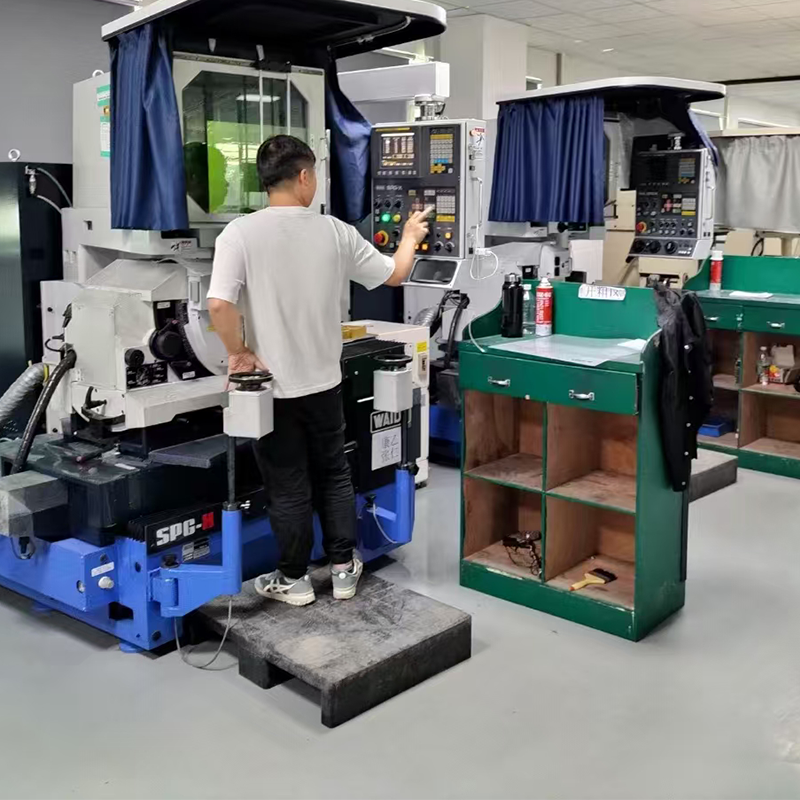
Housing component production focuses on two main areas: planar (flat) surfaces and shaft/bores.
Planar machining: Methods include rough-and-finish milling or grinding, planing for small batches, and multi-surface machining for throughput. For high-volume runs, multi-axis machining centers and large bed mills with dedicated fixtures help maintain repeatability and throughput.
Shaft/bores machining: Use staged approaches — rough boring, semi-precision, and precision boring/reaming. For spindle holes requiring IT6 accuracy and Ra < 1.25 μm, follow with honing or grinding. For batch production, combined multi-axis tooling and compound fixturing significantly improve cycle times and reduce variation.
Design for Manufacturability (DFM) and process control
To consistently deliver housings that fit and function, a factory must apply DFM principles:
- Uniform wall thickness to minimize casting shrinkage and machining distortion.
- Strategic rib placement for stiffness without creating stress concentrations.
- Fixturing-friendly datums to reduce handling variation during machining.
- Pre-planned machining sequences: rough stock removal, stress-relief, finish features last.
- SPC and in-process inspection: real-time monitoring of critical dimensions reduces scrap and variation.
- Full documentation & traceability: batch records, material certificates, and inspection reports for each lot.
Quality assurance and testing
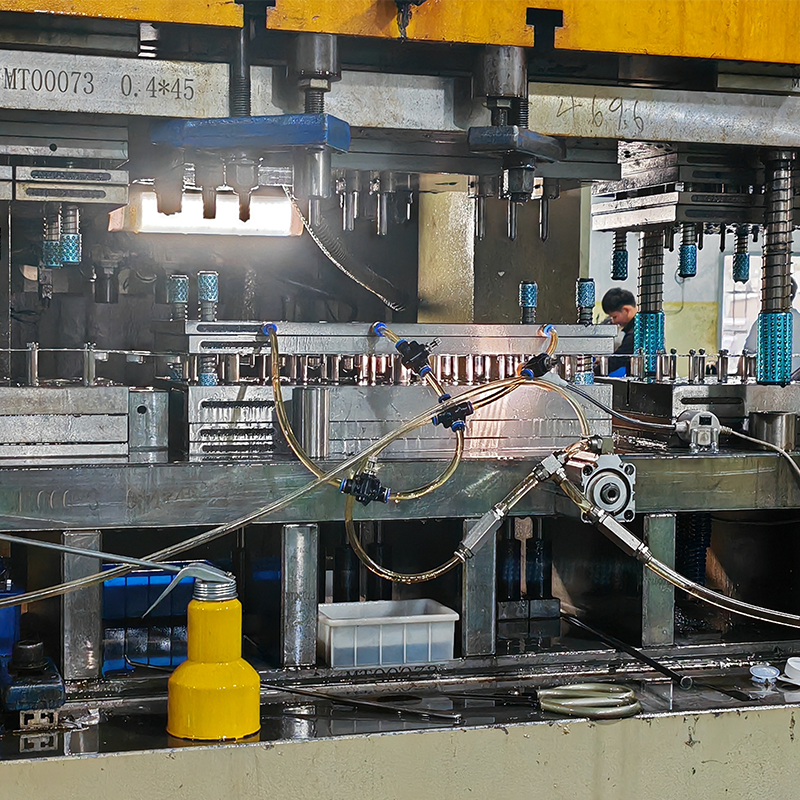
Topmetalstamping implements rigorous QA: CMM inspections of bores and datums, surface roughness checks, runout and coaxiality measurements, and pressure or leakage testing where applicable. For safety- or precision-critical housings, we provide detailed inspection reports and can support third-party audits.
Conclusion
Housing parts may look simple, but they define the mechanical heart of your product. At Topmetalstamping, we combine engineering, tooling, and production expertise to provide a true one-stop service — from material selection and blanking through silicone/metalforming options, heat treatment, precision machining, and assembly. Our manufacturing teams focus on manufacturability, repeatable tolerances, and comprehensive testing so your housings fit right the first time and remain reliable in the field.
If you’re battling housings that don’t meet spec or need a partner for volume production with turnkey, custom service capabilities, let Topmetalstamping help. Contact our factory engineering team for a DFM review, prototype quote, or to discuss a full one-stop manufacturing plan tailored to your product.